Helping organisations secure cloud environments by clearly defining responsibilities, reducing risk and maintaining compliance across public, hybrid and multi-cloud platforms
Trusted to monitor and defend critical systems.
Governance, Risk and Compliance Explained
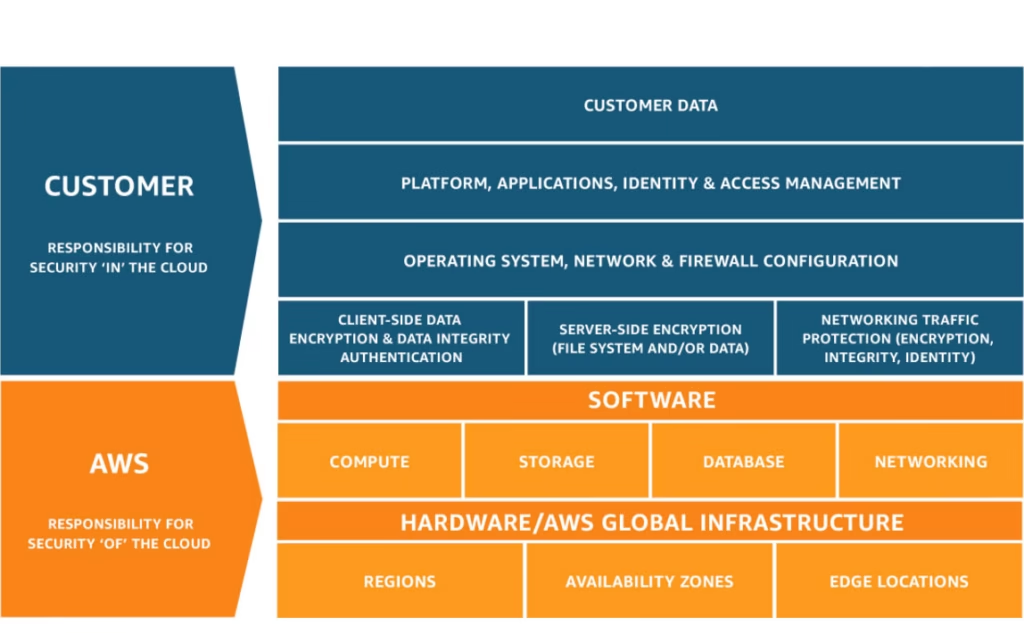
In accordance with the Shared Responsibility Model, the assurance of security and compliance within cloud computing is a collaborative effort between the customer and the cloud service provider. Notably, cloud service providers (CSPs) such as AWS, Microsoft Azure, and Google GCP are tasked with overseeing and addressing security threats concerning the underlying infrastructure of the cloud. Conversely, end users, encompassing both individuals and organizations, bear the responsibility of safeguarding their data and other resources stored within public, hybrid, and multi-cloud environments.
Regrettably, misconceptions surrounding this principle can arise, leading to the erroneous belief that cloud workloads are entirely shielded by the cloud provider. Consequently, users may inadvertently deploy workloads within a public cloud environment that lacks comprehensive protection, thereby exposing vulnerabilities that adversaries could exploit to gain access to operating systems and applications. Even workloads configured with robust security measures are susceptible to becoming targets during runtime, as they remain vulnerable to zero-day exploits.
Cloud Security Architecture
Designing and implementing cloud-native security strategies to protect applications, services and data
For organizations adopting or transitioning to cloud-based models, it's imperative to devise and implement a robust security strategy tailored to safeguard cloud assets. Conventional security measures are insufficient for protecting cloud services, applications, and resources. Crafting and executing a comprehensive security strategy capable of countering a broad spectrum of threats and sophisticated attacks within the cloud ecosystem is paramount.
Establishing governance frameworks to manage risk, compliance and accountability in dynamic cloud environments
Cloud governance comprises policies and regulations governing cloud usage for organizations operating in or migrating to the cloud. This framework ensures the proper management of data security, system integration, and cloud computing deployment. Given the dynamic nature of cloud systems, involving third-party vendors and internal teams, adaptable cloud governance solutions are essential. Effective cloud governance frameworks mitigate risks, enhance data security, and facilitate seamless cloud operations aligned with business objectives. This approach to cloud governance balances resource allocation and risk management while emphasizing accountability, preventing issues such as poor system integration and misalignment with business goals, and addressing new security challenges associated with cloud deployment.
Detecting threats, monitoring activity and responding quickly to security risks across cloud environments
Cloud security monitoring encompasses various processes enabling organizations to monitor, manage, and observe operational workflows within a cloud environment. It entails a blend of manual and automated procedures to evaluate the security of servers, applications, platforms, and websites. Cloud security experts conduct ongoing assessments of data stored in the cloud, identifying suspicious activities, and addressing cloud-based security threats. Upon detecting existing threats or vulnerabilities, they recommend swift remedial actions to mitigate risks effectively.
“ Cyber Flow caught a breach attempt our old provider completely missed. Their team contained it in minutes and guided us through recovery without any panic. This is the first time I’ve actually felt confident in our security setup. ”